
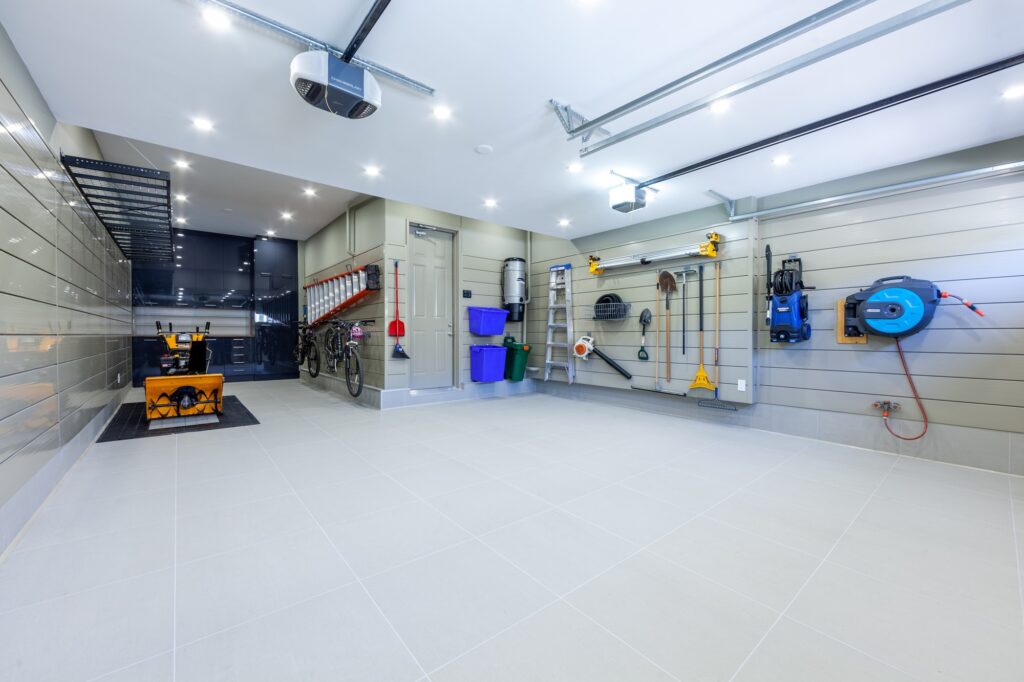
Garage floor coating installation day starts in the morning, when the crew grinds and preps the concrete, repairs cracks, lays the base coat, broadcasts the flake, scrapes and vacuums, then seals it all with a clear top coat by the afternoon. Most polyaspartic garage floor installs are a one-day job. You can usually walk on the floor that same evening and park your car back in within 24 hours. The biggest thing you need to do is clear the garage before the crew shows up.
Here’s the full day, start to finish, so nothing catches you off guard.
Before We Arrive: How to Prepare Your Garage
The one thing we ask homeowners to handle is emptying the space. Everything on the floor and along the walls needs to come out so we have full access to the slab. That includes:
- Vehicles, bikes, and anything on wheels
- Storage bins, tools, and freestanding shelves
- Trash cans, fridges, freezers, and workout equipment
- Anything mounted low on the walls that could catch dust
If you have a wall-mounted system or cabinets staying in place, let us know ahead of time so we can plan around them. Once the garage is clear, we handle the rest. When the crew arrives, we lay plastic sheeting across the driveway in front of the door and cover anything that needs protection from grinding dust. That first step keeps your driveway and belongings clean.
Pick your color before the day arrives, too. Browse our color chart and have your flake blend chosen so there are no decisions to make on install morning.
The Garage Floor Coating Installation Day Timeline
Here’s roughly how a standard residential garage floor coating installation day flows. Larger or more damaged floors take a little longer, but the order stays the same.
- Setup and protection (30 to 45 minutes). Plastic goes down, the slab gets a final inspection, and the crew stages equipment.
- Diamond grinding (1 to 2 hours). Heavy grinders open the concrete pores so the coating bonds mechanically. This is the loud part of the day.
- Crack and pit repair (30 minutes to 1 hour). Cracks, control joints, spalling, and divots get filled with industrial repair products and ground smooth.
- Polyaspartic base coat (1 hour). The tinted base coat is rolled across the prepped slab in your chosen color.
- Vinyl flake broadcast (30 minutes). While the base coat is wet, flake is thrown to refusal across the floor for full coverage and texture.
- Cure, scrape, and vacuum (1 to 2 hours). Once the base sets, loose flake is scraped and vacuumed so the surface is smooth underfoot.
- Polyaspartic top coat (1 hour). A clear, UV-stable top coat seals everything in and gives the floor its gloss and chemical resistance.
From arrival to final top coat, most garages wrap up in 6 to 8 hours.
What Sounds and Looks Normal on Garage Floor Coating Installation Day
A few things are worth knowing so the day feels normal rather than alarming:
- The morning is loud. Diamond grinding is the noisiest part. It usually runs an hour or two, then the rest of the day is quiet.
- Dust is controlled, not eliminated. We run dust collection on the grinders, in line with OSHA’s guidance on controlling silica dust during concrete grinding, but a little fine dust is part of any concrete prep. The plastic sheeting catches most of it.
- There’s a mild odor. Polyaspartic has a noticeable smell during application that fades quickly once the top coat cures. Keeping the garage door open during the day helps.
- The color looks different wet vs. dry. The base coat and flake look one way while wet and settle into their true finish once the clear coat cures. The result matches the sample you picked.
Cure Times: When You Can Walk, Load, and Park
Polyaspartic cures fast, but it’s not instant. Following these windows is what separates a floor that lasts decades from one that fails early:
- Light foot traffic: usually that same evening, often within 12 to 24 hours of the top coat.
- Heavy items (toolboxes, fridges, shelving): wait about 48 hours before dragging or setting heavy gear back in.
- Parking your vehicle: wait 24 to 72 hours depending on temperature and humidity. We give you the exact go-ahead for your floor.
In a humid coastal climate like the Grand Strand, we build the schedule around real conditions on your install day rather than rushing the cure. That patience is part of why a polyaspartic floor outlasts a typical epoxy job, which we break down further in our post on polyaspartic vs. epoxy in South Carolina.
What We Leave You With
Before the crew packs up, you get:
- A walkthrough of the finished floor
- Clear cure-time instructions for walking, loading, and parking
- Care and maintenance guidance to keep the finish looking sharp (see our full guide on how to maintain a polyaspartic garage floor coating)
- Your warranty details in writing, either the 10-year or 21-year option you selected, covering materials and labor
One day of work, a clear set of cure times, and a written warranty. That’s the whole point of a professional polyaspartic install.
A Few Things That Can Affect the Timeline
No two slabs are identical. A handful of factors can stretch the day or, occasionally, push part of the work to a second visit:
- Concrete condition. Heavily cracked, spalled, or previously coated floors need more prep and repair time. Removing a failed old coating adds hours. If your coating is already lifting, see our guide on why garage floor coatings peel and how to prevent it.
- Garage size. A three-car or oversized garage naturally takes longer than a single bay.
- Moisture in the slab. If moisture testing shows high vapor transmission, a moisture-mitigating step may be needed before the base coat.
- Weather. Extreme heat, cold, or heavy rain can shift cure times. Coastal humidity is normal and planned for, but a major storm tracked by the National Weather Service’s tropical weather updates may move your date.
We flag any of these during the quote so your install day has no surprises. If you want a sense of how these same factors affect pricing, see our guide on garage floor coating cost in Myrtle Beach.
Frequently Asked Questions
What happens on garage floor coating installation day?
Expect a full day of work: setup and protection, diamond grinding, crack repair, a polyaspartic base coat, flake broadcast, scrape and vacuum, and a clear top coat, typically wrapping up in 6 to 8 hours. You can walk on the floor that evening and park a vehicle on it within 24 to 72 hours.
How long does a garage floor coating installation take?
Most residential garage floor coating installations take one day, roughly 6 to 8 hours from arrival to the final top coat, though larger garages or heavily damaged concrete can extend the timeline.
What do I need to do to prepare for garage floor coating installation day?
Clear everything off the floor and away from the walls, including vehicles, storage bins, tools, and any low-mounted items. Pick your color and flake blend ahead of time so there’s nothing to decide on install morning.
How long after garage floor coating installation can I park my car?
Most vehicles can go back in the garage within 24 to 72 hours, depending on temperature and humidity. Your installer will give you the exact go-ahead based on conditions on your install day.
Ready to Schedule Garage Floor Coating Installation Day?
Get Your Garage Floor Done in a Single Day
Garage Kings Myrtle Beach installs polyaspartic garage floor coatings in one day, with your choice of a 10-year or 21-year warranty covering materials and labor. Call 843-892-6060 or request a quote online to schedule an install in Myrtle Beach, North Myrtle Beach, Garden City Beach, Murrells Inlet, Conway, and nearby Grand Strand communities.