
If you searched “How to clean epoxy garage floor” to land here, the short answer is that the care routine below applies just as well to true polyaspartic coatings — which is what we install, and which is why our floors hold up better against coastal humidity than standard epoxy.
How to Clean Epoxy Garage Floor
Homeowners choose polyaspartic garage floor coatings for their exceptional durability, sleek, high-gloss appearance, and ability to stand up to humidity, temperature fluctuations, heavy foot traffic, and vehicle use. Whether you’re parking cars in the garage, storing your tools here, or using it as an extension of your living space, you’ll be especially happy to hear that these coatings are extremely low maintenance. With a simple care routine and a few best practices, you can keep your garage floor looking glossy, clean, and performing at its best for years to come.
Daily and Weekly Maintenance Tips for Polyaspartic Floors
The good news is that polyaspartic floors are designed to resist stains, moisture, and abrasions, making routine upkeep quick and straightforward. Here’s how to maintain your polyaspartic garage floor’s appearance and functionality.
Keep Dust and Debris Under Control
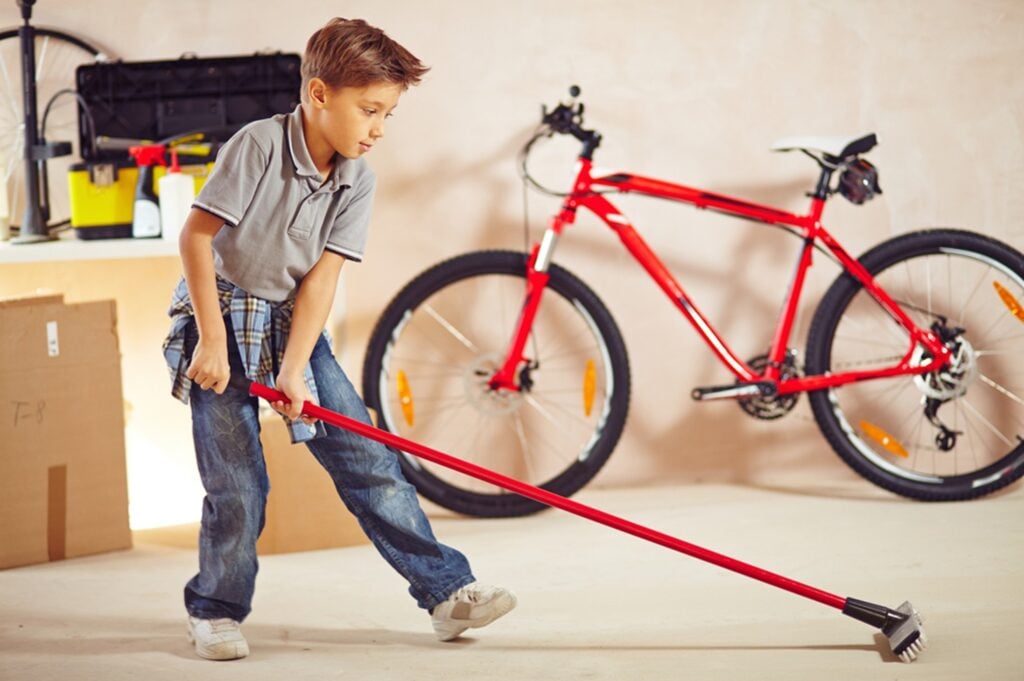
Dust, dirt, and pollen may seem harmless, but over time they can act like sandpaper under foot or tires. A quick sweep using a soft-bristle broom or dust mop every few days helps prevent fine debris from dulling the surface of your polyaspartic garage floor. If you use your garage frequently, this small step can significantly extend the life of your floor’s glossy finish.
For homeowners who prefer a faster solution, a cordless vacuum designed for hard floors can also be an effective way to remove dirt and debris without scratching the surface.
Spot-Clean Spills Right Away
Polyaspartic coatings are resistant to oil, chemicals, and moisture, but it’s still best to clean up spills as soon as they happen. Whether it’s motor oil, road salt residue, or a spilled beverage, wiping it up promptly prevents buildup and keeps your garage looking pristine.
A soft cloth or mop with warm water is often all you need for simple spills. For slightly tougher messes, a mild, non-abrasive cleaner diluted in water works well without harming the polyaspartic coating.
Weekly Mopping for a Polished Look
To maintain that like-new shine, plan on mopping your polyaspartic garage floor about once a week or as needed. Use a microfiber mop and a gentle cleaner made for coated or polished concrete surfaces. This helps remove any lingering grime and restores the floor’s natural luster.
While mopping, avoid over-saturating the floor with water. Polyaspartic coatings are moisture-resistant, but excess water can leave streaks if not properly dried. A light, even mop followed by air-drying is usually sufficient.
Rinse Away Salt and Sand
In coastal areas like Myrtle Beach, garages often collect sand, salt, and moisture tracked in from outside. Regularly rinsing and mopping these residues prevents buildup that could dull the surface over time.
What to Avoid When Caring for Your Polyaspartic-Coated Garage Floor
While polyaspartic floors are tough, avoiding a few common mistakes while cleaning will help ensure they stay beautiful and damage-free.
Skip Harsh or Abrasive Cleaners
One of the biggest mistakes homeowners make is reaching for harsh chemicals or abrasive cleaners. Products containing citrus, vinegar, bleach, or ammonia can gradually wear down the coating’s finish. Similarly, gritty powders and scrubbing pads can scratch the surface. A pH-neutral cleaner — one that sits close to water’s neutral pH of 7 rather than skewing acidic or alkaline — is the safest bet for any coated concrete surface.
Stick with mild, pH-neutral cleaners and soft cleaning tools to protect the integrity of the coating.
Don’t Use Metal Scrapers or Stiff Brushes
When dealing with sticky residue or stubborn spots, it may be tempting to use a metal scraper or stiff brush. However, these tools can leave scratches or gouges that disrupt the smooth finish of your garage floor. Instead, let warm water and a gentle cleaner do the work, and use a soft cloth or plastic scraper if absolutely necessary.
Avoid Dragging Heavy Objects Across the Floor
Polyaspartic floors are designed to handle weight, but dragging heavy furniture, tool chests, or equipment across the surface can cause unnecessary wear. Use protective mats, furniture sliders, or lift items when moving them to prevent scratches and scuffs. If your slab already has cracks or damage, get those addressed before they turn into bigger repair jobs.
Be Mindful of Tires and Equipment
Although polyaspartic coatings offer excellent resistance to heat and tire marks, it’s still wise to clean areas where vehicles are frequently parked. If you notice tire residue, a gentle weekly cleaning prevents buildup and keeps the floor looking uniform.
Protect Your Investment With a Professional Installation
A polyaspartic garage floor is an investment in your home’s functionality, style, and long-term value. While proper maintenance can keep it looking its best, the quality of installation makes all the difference in how well your floor performs over time. That’s why you should always have an experienced professional install your polyaspartic garage floor.
For homeowners in Myrtle Beach, SC, the company to trust is Garage Kings. Our experts will ensure the coating is applied correctly, cured properly, and designed to withstand real-world use.
Contact us today to learn more about our professional polyaspartic garage floor solutions in Myrtle Beach, or call 843-892-6060, and discover how easy it is to enjoy a lifetime of shine with the right care and expert support.