
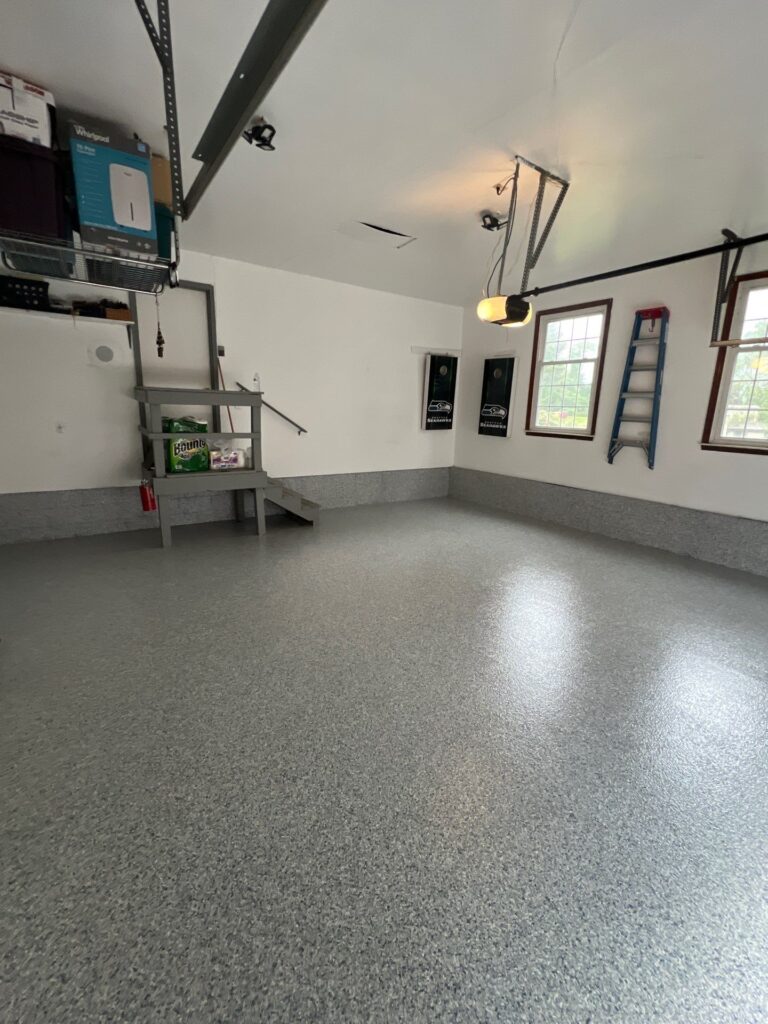
When a garage floor coating peels, the product is almost never the real problem. It comes down to how the floor was prepared and how much moisture is moving through the slab. A coating bonds to clean, properly profiled concrete — if the prep was rushed, or if vapor is rising through the slab, the bond fails and the coating lifts, flakes, or bubbles. On the coast, where humidity and a high water table are a daily fact of life, moisture is an especially common culprit.
Here’s what actually causes garage floor coating peeling, why Grand Strand garages are more prone to it, and how to make sure your floor stays put.
The Real Reasons Coatings Peel
Peeling, also called delamination, happens when the coating loses its grip on the concrete or on the layer beneath it. A few causes account for the large majority of failures:
- Poor surface preparation. This is the number one reason. Concrete has to be mechanically profiled with a diamond grinder so the coating can lock into the surface — a standard covered in detail by the International Concrete Repair Institute’s surface profile guidelines. Simply cleaning the floor or acid etching it is not enough. A smooth, sealed, or slick surface gives the coating nothing to grab.
- Moisture vapor from the slab. Concrete is porous, and water vapor can rise up through it from the ground below. When that vapor pressure builds under a coating, it pushes the coating off the slab, causing bubbles, blisters, and eventually peeling. Professional installers test for this using the ASTM F2170 relative humidity standard before any coating goes down.
- Contamination. Oil, grease, tire dressing, and silicone soak into concrete and act as bond breakers. If they’re not fully removed, the coating sticks to the contaminant instead of the concrete.
- Hot tire pickup. Hot tires can grab a poorly bonded coating and literally pull it off the floor when you park.
- Thin, single-coat products. DIY kits and one-coat jobs, sometimes labeled epoxy garage floor kits, wear through and lift far sooner than a professionally installed multi-layer system.
- UV breakdown. Sunlight degrades non-UV-stable coatings over time, which shows up as yellowing, chalking, and a weakened surface that fails faster.
- Edge lifting. The seam where the floor meets the wall is hard to clean and prep, so peeling often starts there and works inward.
Notice what most of these share: they’re installation and prep issues, not defects in the coating. A quality product installed the wrong way still fails.
Why Coastal Garages Peel More Often
Here in the Myrtle Beach area, the biggest hidden risk behind garage floor coating peeling is moisture. The Grand Strand’s high humidity and high water table mean more water vapor is available to travel up through your slab than in a dry inland climate — a dynamic we cover in more detail in our post on coastal humidity and garage floors. If a coating goes down without checking for that moisture or handling it correctly, the odds of bubbling and delamination climb. Salt air and strong summer sun add to the stress. This is exactly why prep and product choice matter more here than in a lot of the country.
On the coast, moisture rising through the slab is the quiet cause of most peeling. A coating that ignores it will not last.
How to Prevent a Coating From Peeling
A floor that stays bonded comes down to doing the unglamorous steps right, before any color goes down:
- Grind the concrete. Diamond grinding opens the pores and creates the surface profile the coating needs to anchor into. This single step prevents a huge share of peeling problems.
- Check for moisture. Testing the slab reveals a vapor problem before it ruins a floor. When moisture is a concern, the right base coat or vapor-handling step protects the system from below.
- Remove every contaminant. Oil, grease, and old sealers have to come out of the concrete, not just off the top, so the coating bonds to bare, sound concrete.
- Use a real system, not a kit. A proper multi-layer build with a strong base and a durable, UV-stable top coat holds up to heat, sun, and traffic far better than a thin DIY epoxy garage floor coat.
- Hire a trained installer. Most peeling starts with a step that was skipped or done wrong. Experienced crews with the right equipment are what turn a coating into a floor that lasts. See our guide on questions to ask before hiring a garage floor coating company if you’re vetting installers.
This is the core of how we work. Our garage floor coatings start with diamond grinding and proper prep, then use a polyaspartic base and polyaspartic top coat that’s heat and UV stable. That system, installed correctly, is what lets us back our floors with warranties covering both materials and labor. If your slab also has cracks, those get addressed during prep too, which we cover in our post on coating a cracked garage floor.
Can a Peeling Floor Be Fixed?
Yes, but not by coating over it. New coating will not bond to a failed layer, so painting over peeling areas just traps the failure underneath and the new surface lifts in the same spots. The lasting fix is to grind the failed coating off completely, get back to sound concrete, correct whatever caused the failure (such as a moisture issue), and rebuild the system properly. It’s more work than a quick recoat, but it’s the only approach that actually holds.
Frequently Asked Questions
Why is my garage floor coating peeling?
Garage floor coating peeling almost always comes down to two things: the concrete wasn’t properly ground and profiled before the coating went on, or moisture vapor is rising through the slab and pushing the coating off from underneath. Contamination, hot tire pickup, and thin single-coat products are the other common causes.
Can you fix a peeling garage floor coating by recoating it?
No. New coating won’t bond to a failed layer, so recoating over peeling areas traps the failure underneath and the new coat lifts in the same spots. The failed coating has to be ground off completely and the cause of the failure corrected before rebuilding the system.
Is epoxy garage floor peeling more common than polyaspartic peeling?
Peeling in either type of coating comes down to prep and moisture, not the chemistry itself. That said, thin DIY epoxy kits are more prone to peeling because they’re often single-coat systems without proper diamond-grinding prep, while professionally installed polyaspartic systems use mechanical profiling and moisture testing as standard steps.
How do you prevent a garage floor coating from peeling?
Diamond grinding the concrete for proper surface profile, testing for slab moisture before coating, removing all oil and contamination, and using a professionally installed multi-layer system rather than a thin DIY kit are the main ways to prevent peeling.
Want a Floor That Stays Put?
If your current coating is lifting, or you want to get it right the first time, Garage Kings Myrtle Beach installs polyaspartic floors built for coastal conditions, with the prep and moisture handling that prevent peeling. Our floors are backed by warranties covering materials and labor, and most go in within a day. Call 843-892-6060 or request a free quote online, serving Myrtle Beach, SC and nearby areas.