
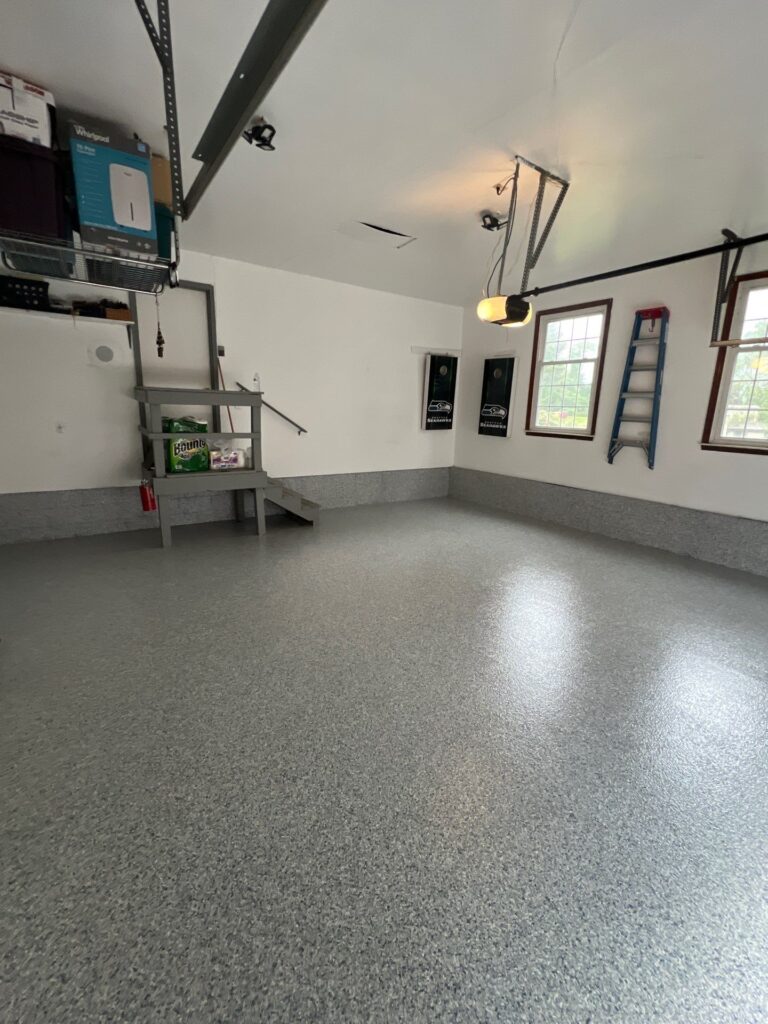
If your Myrtle Beach garage floor is showing spreading cracks, chalky white residue, pitting or surface dust, set-in stains, or a peeling old coating, the slab is telling you it’s time for repair. These common garage floor effects from coastal living don’t fix themselves – they get worse. Spring is the smart window to address them on the Grand Strand.
Mild temperatures and lower humidity than peak summer mean cleaner installs, easier scheduling, and a finished floor before the heat and storms of July arrive. Here are the five garage floor effects to watch for and what the fix looks like.
1. Cracks That Keep Spreading
Hairline cracks are normal in any concrete slab. Concrete shrinks as it cures and moves with temperature swings. The problem is when those cracks grow past about an eighth of an inch wide or start to branch out across the floor. Once they open up, water, salt, and dirt work their way in and accelerate the damage from below.
In coastal South Carolina, cracks pick up speed because of the daily heat-cool cycle and constant moisture vapor pushing up through the slab. Left alone, a small crack in March can be a quarter-inch separation by August – one of the most visible garage floor effects of neglect.
A proper coating system fills cracks with industrial repair products before any coating goes down, then locks the surface under a flexible polyaspartic layer that moves with the concrete instead of fighting it. For more details on why this happens, see our article explaining why concrete garage floors crack.
2. White, Chalky Residue (Efflorescence)
That white, powdery film on your bare garage floor is called efflorescence. It’s salt and mineral deposits left behind when moisture evaporates up through the concrete. If you see it, your slab is actively transmitting moisture vapor, which is incredibly common in coastal Grand Strand homes.
Efflorescence is a warning sign for two reasons:
- It tells you the concrete is constantly damp, which slowly breaks down the surface
- It tells you any coating installed without proper moisture testing will likely fail
We covered this in detail in our post on how coastal humidity affects your garage floor over time. The short version: a coating system designed for coastal South Carolina starts with moisture testing and uses a polyaspartic build that can handle ongoing vapor pressure.
3. Pitting, Spalling, or Surface Dust
Run a hand or a broom across your slab. If you pick up fine gray dust, see small craters (pitting), or notice the top layer flaking off in shallow patches (spalling), the surface of your concrete is breaking down. Common causes of these garage floor effects in Myrtle Beach garages:
- Years of exposure to salt air and tracked-in beach sand
- Spilled pool chemicals, fertilizer, or driveway salt residue
- Aging concrete that was poured without a sealer
Once the surface starts dusting or pitting, it’s only going to get worse. A diamond grind followed by a polyaspartic coating stops the breakdown by sealing the slab and creating a solid, easy-to-clean surface on top of it.
4. Stains You Cannot Get Out
Bare concrete is porous. Oil, gas, brake fluid, transmission fluid, paint, and even rust from a wet bike or grill leg sink right into the slab and stay. You can scrub all you want with degreaser. The stain is in the concrete, not on it.
Set-in stains don’t just look bad – they’re permanent garage floor effects of unsealed concrete. They tell you that whatever spilled is now soaking into the surface every time it gets wet. A coated floor flips that. Spills sit on top of the polyaspartic layer where you can wipe them up with a rag and a mild cleaner. No soaking, no permanent marks, no slow chemical wear on the slab below.
5. An Old Coating That Is Peeling, Bubbling, or Yellowing
If you already have a coating and it’s starting to:
- Lift or peel near the garage door
- Bubble in patches across the slab
- Yellow on light-colored areas exposed to sun
- Chalk and lose gloss
- Pull up under hot tires after summer drives
That coating has reached the end of its life and is no longer protecting the concrete. Most early-failure cases in Myrtle Beach are box-store epoxy kits or value-priced installs that skipped diamond grinding, moisture testing, or both. We get into the side-by-side details in our breakdown of polyaspartic vs epoxy in South Carolina.
The fix is not patching over the old coating. The old layer needs to be ground off, the slab re-prepped, and a proper polyaspartic system installed in its place. Before hiring anyone, make sure you’re asking the right questions about their process.
If you’re seeing two or more of these garage floor effects, your floor is not waiting for next year. It’s asking for attention now, while spring conditions are working in your favor.
Why Spring Is the Right Time to Coat in Myrtle Beach
The Grand Strand has a short list of ideal coating windows each year, and spring is the strongest one. Here’s why:
Mild temperatures: Spring days in the 60s to low 80s sit inside the ideal range for polyaspartic application and proper curing.
Lower humidity than peak summer: Less ambient moisture during install means cleaner curing and better adhesion.
Beat the storm season: Coastal South Carolina summer brings heat, high humidity, and afternoon thunderstorms that complicate any outdoor or open-garage project.
Set up for summer use: A floor coated in April or May is ready for grills, kayaks, beach gear, and busy garage traffic by Memorial Day.
You also tend to get easier scheduling in spring than during the late-summer rush, when everyone is trying to squeeze in projects before the holidays.
What the Fix Actually Looks Like
A professional install on a Myrtle Beach garage floor is a one-day job from arrival to walk-on ready. Here’s what to expect:
Concrete inspection and moisture testing: We confirm what the slab is doing before we touch it, checking for all the garage floor effects mentioned above.
Diamond grinding: Heavy grinders open the concrete pores so the coating bonds mechanically, not just chemically.
Crack and pit repair: All cracks, control joints, and surface damage get filled with industrial-grade repair products.
Polyaspartic base coat: Tinted to your chosen color and rolled across the prepped slab.
Vinyl flake broadcast: Flake is thrown to refusal for full coverage and texture.
Scrape and vacuum: Loose flake is removed to ensure a smooth finish.
Polyaspartic top coat: A clear, UV-stable finish locks everything in and provides the protective layer.
You can typically walk on the floor that evening and park on it within 24 hours. The full system comes with a 10-year or 21-year warranty covering both materials and labor. For ongoing care, check our guide on how to maintain a polyaspartic garage floor coating.
Additional Services to Complete Your Garage
While addressing these garage floor effects, many Myrtle Beach homeowners also upgrade their garage organization. Consider pairing your new floor with:
- Overhead garage storage installation to keep seasonal items off your beautiful new floor
- Garage cabinet installation for tools and equipment protection
- Basement floor coatings using the same polyaspartic system
- Concrete patio coatings to extend your living space
A complete garage transformation protects your investment and maximizes functionality.
Get Your Garage Floor Coated This Spring
Ready to knock out your garage floor this spring? Don’t let these common garage floor effects continue damaging your concrete. Garage Kings Myrtle Beach installs polyaspartic garage floor coatings with a one-day install and your choice of a 10-year or 21-year warranty on materials and labor.
Our certified installers serve homeowners throughout Myrtle Beach, North Myrtle Beach, Conway, Murrells Inlet, Pawleys Island, Carolina Forest, and nearby Grand Strand communities.
Call 843-892-6060 or request a quote online for an on-site visit and free estimate.