
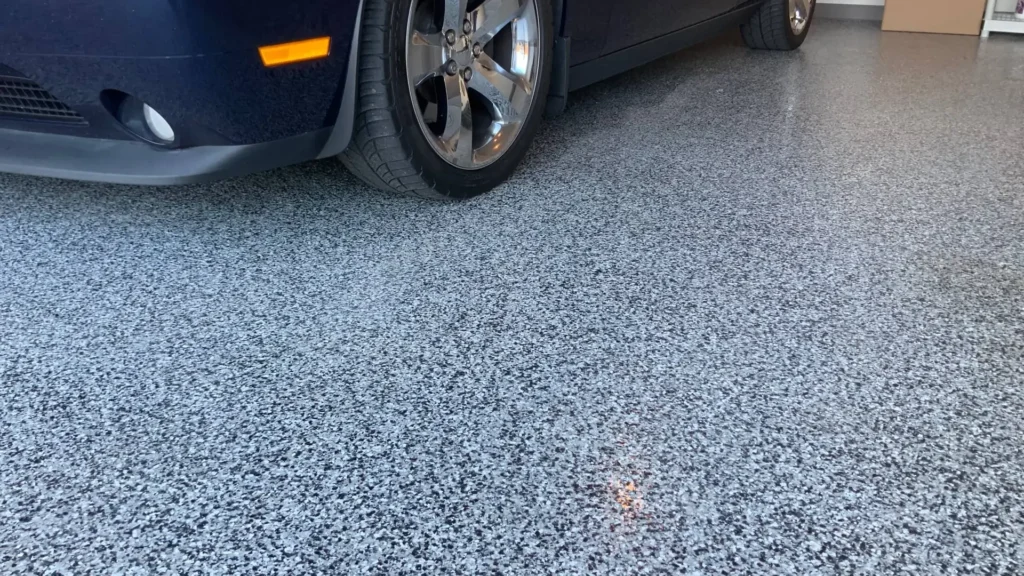
For most carports, a floor coating is worth it. A carport slab takes full sun, wind-driven rain, salt air, and oil drips with no walls to shield it, and a proper coating protects the concrete from all of that while making the space look far better and easier to clean. The one catch is that it only pays off if you use a true outdoor, UV-stable polyaspartic coating on a sound slab. An indoor epoxy kit will yellow and peel outdoors, and a badly damaged slab needs attention first. Here is what a carport coating actually does, why the right product matters so much, and when it makes sense to move forward or wait.
What a Carport Coating Actually Does
A carport floor works harder than most people think, and a coating addresses the wear a bare slab just absorbs:
- Protects the concrete: it seals the surface against moisture, salt, and UV so the slab holds up longer instead of pitting, staining, and breaking down.
- Resists drips and stains: oil, transmission fluid, and leaf tannins sit on top of the coating and wipe up, rather than soaking into porous concrete.
- Cleans easily: a sealed surface hoses or sweeps clean, which matters under a carport that collects pollen, sand, and yard debris.
- Adds curb appeal: a flake finish turns a plain gray pad into a finished-looking space that lifts the whole exterior of the home.
- Improves traction: decorative flake and grip additives give a wet carport slab more slip resistance than smooth concrete.
Why a Carport Needs the Right Coating
This is where “worth it” is won or lost. A carport is essentially outdoor concrete: it sits in direct sun for hours, catches rain blown in from the sides, and breathes salt air all year on the coast. That combination destroys the wrong product. Indoor epoxy is not built for constant UV and will amber, chalk, and peel within a season or two outdoors. A true outdoor system uses a UV-stable polyaspartic that holds its color and bond in full sun and weather. It also has to start with real surface prep, since an exterior slab that was not ground and cleaned properly will let the coating lift. Get the product and prep right and a carport coating lasts for years. Get them wrong and it fails fast, which is where the “is it worth it” doubts usually come from.
A carport coating is only as good as the product and the prep. The right outdoor polyaspartic lasts for years, the wrong indoor epoxy fails in a season.
When It’s Worth It, and When to Wait
A coating is a strong yes in most cases, but not every slab is ready on day one:
- Worth it: a sound slab with normal wear, staining, or a dull, dated look. This is the sweet spot, and a coating transforms it.
- Worth it: a carport you actually use and want to keep clean, protected, and looking sharp.
- Assess first: a slab with heavy spalling, deep structural cracks, or an unaddressed moisture problem. Those get repaired or evaluated before coating, not covered over.
The good news is that minor cracks, pits, and stains are a normal part of prep and get handled during the job. A quick assessment is all it takes to know which situation you are in.
Is It Worth the Cost?
A professional coating costs more upfront than a can of concrete paint or a bucket of sealer, and that is the honest tradeoff. The difference is how long it lasts. Paint and basic sealers wear off and need redoing every couple of years, while a quality outdoor polyaspartic holds up for years with little upkeep. When you factor in that you are not repainting or resealing on repeat, and that the coating is protecting the slab itself from damage, the long-term value usually lands in the coating’s favor. For a similar breakdown on outdoor surfaces, our concrete patio and exterior coatings page covers the same system used on carports, porches, and walkways, and our post on patio coating vs. pavers walks through the long-term value on an outdoor slab.
Carports on the Coast
On the Grand Strand, a carport is squarely in the path of the coast’s toughest conditions. Salt air corrodes and wears at exposed concrete, humidity and rain keep the slab damp, and the sun beats down on it all summer. That makes the case for a coating stronger here than in a mild inland climate, as long as it is the UV-stable, moisture-tolerant kind. The same polyaspartic technology that makes our garage floor coatings hold up indoors is what lets it perform on an exposed carport slab, and you can read how it compares to other products in our guide to polyaspartic vs. epoxy floors.
Thinking About Coating Your Carport?
If your carport slab is stained, dull, or just taking a beating from the coast, Garage Kings Myrtle Beach can tell you honestly whether a coating is the right move and handle it with a UV-stable outdoor system built for the elements. Call 843-892-6060 to get your quote, serving Myrtle Beach, SC and nearby areas.