
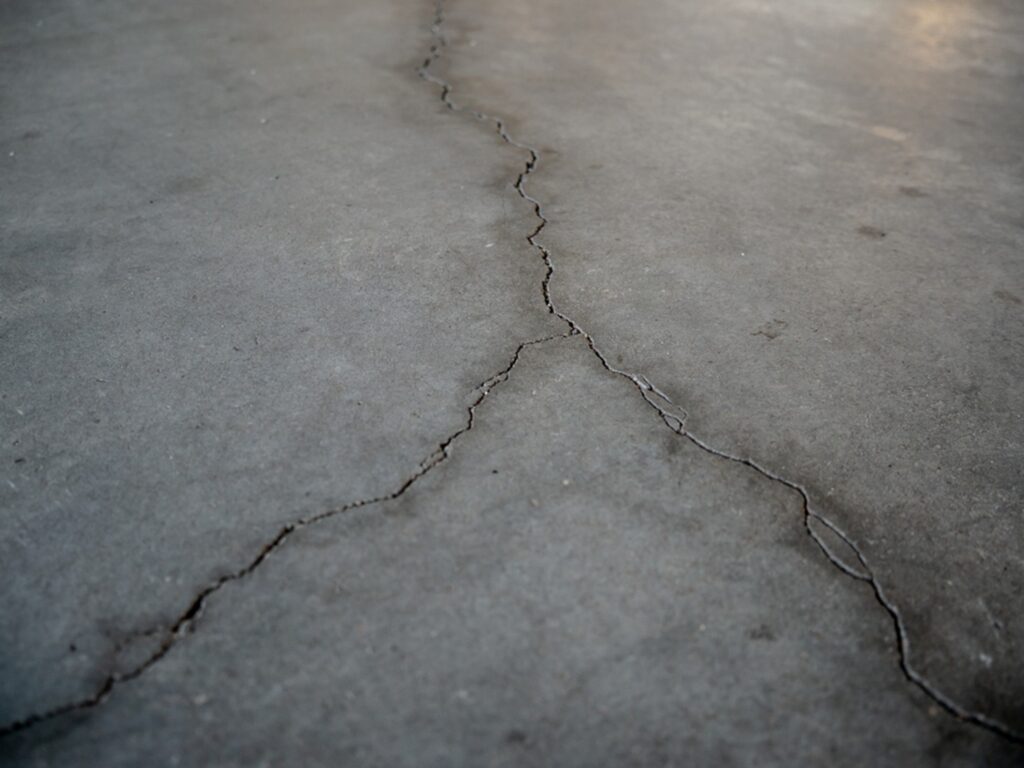
A garage floor crack is one of the most common yet frustrating issues homeowners face. For many, the garage is more than just a place to park a car; it’s a workshop, a storage unit, and often the primary entrance to the home. Because it serves such a utilitarian purpose, we tend to think of the concrete floor as nearly indestructible. However, one day you might pull the car out or move a storage bin only to notice a jagged line snaking across the gray surface.
It can be incredibly disheartening to see these cracks on a surface you depend on for so much. Of course, it’s important to realize that while concrete is strong, it is also rigid and porous, making it susceptible to environmental stressors. For example, shifting soil, moisture intrusion, and extreme temperature swings can all turn a pristine slab into a map of fractures. This will eventually impact both the aesthetic value of your home and the structural integrity of the garage floor. Fortunately, professional garage floor coatings can protect your concrete from these damaging forces.
Therefore, understanding why concrete garage floors crack — and how to stop it — is the first step in preserving your investment.
The Most Common Causes of Concrete Garage Floor Cracks
In order to protect your garage floor, you have to understand the forces working against it. After all, concrete cracking is rarely the result of a single event; rather, it is usually a combination of physical and environmental factors.
1. Natural Shrinkage From the Drying & Curing Process
When concrete is poured, it contains a significant amount of water. As the slab cures and dries, the water evaporates, and the concrete slightly shrinks. Because the slab is restrained by the ground and the garage walls, this shrinkage creates internal tension. If the tension becomes too great, the concrete relieves the stress by cracking.
This is why professional installers include control joints — those intentional grooves in the floor — to give the concrete space to move. According to the Portland Cement Association, proper curing techniques can reduce shrinkage cracking by up to 50%.
2. Settlement and Shifting Soil
The ground beneath your garage is not as static as it seems. If the soil was not properly compacted before the pour, or if heavy rains cause the soil to wash away or soften, the concrete loses its support. Without a solid base, the weight of the slab (and your vehicles) causes the concrete to settle into the voids, leading to deep, structural cracks.
3. Thermal Expansion and Contraction
Concrete expands when it gets hot and contracts when it gets cold. If the floor doesn’t have enough room to move, or if the temperature changes are too rapid, the stress results in surface fractures.
4. Moisture and the Freeze-Thaw Cycle
Concrete is naturally porous, meaning it acts like a hard sponge. It absorbs moisture from the air, from wet tires, and from snow melt. In colder climates, this moisture freezes inside the pores of the concrete. Since water expands when it turns to ice, it exerts incredible internal pressure on the concrete.
This freeze-thaw cycle is one of the leading causes of surface scaling and the widening of existing cracks. The American Concrete Institute notes that freeze-thaw damage is the number one cause of concrete deterioration in cold weather regions.
5. Heavy Loads
Vehicles, storage cabinets, tools, and equipment all place significant weight on the garage floor. While concrete is designed to support heavy loads like this, uneven pressure or repeated stress in specific areas can weaken the surface. Over time, this constant strain can cause cracks to develop, especially if the concrete already has minor imperfections.
How Polyaspartic Floor Coatings Protect Concrete From Further Damage
If you want to protect your garage from the aesthetic and functional issues associated with concrete cracking, a professional floor coating is your best line of defense. Polyaspartic coatings have emerged as the gold standard for garage floor protection as they offer a range of benefits:
A Seamless Moisture Barrier
One of the primary ways polyaspartic coatings prevent damage is by sealing the pores of the concrete garage floor. Unlike unfinished concrete, which drinks in water and oil, a polyaspartic system creates a non-porous, waterproof barrier. This prevents moisture from entering the slab, effectively neutralizing the threat of the freeze-thaw cycle and preventing salt or chemicals from corroding the internal rebar.
Superior Flexibility and Bond
While epoxy can become brittle over time, polyaspartic coatings are engineered with a degree of flexibility. This allows the coating to move with the concrete during thermal expansion and contraction without cracking or peeling. Additionally, polyaspartic resins penetrate deep into the capillaries of the concrete, creating a mechanical bond that is far stronger than a simple surface layer.
Bridging and Sealing Existing Cracks
During the professional installation process, existing cracks are not just painted over. They are cleaned out and filled with high-strength mending materials. The polyaspartic topcoat then bridges these areas, creating a continuous, seamless surface. This prevents small cracks from being exposed to the elements, which stops them from widening into major structural issues.
Chemical and Impact Resistance
Garage floors take a beating from dropped tools, heavy floor jacks, and caustic chemicals like gasoline, brake fluid, and road salt. Polyaspartic coatings are significantly more durable than paint or standard epoxy, and they resist staining and impact damage, ensuring that the physical surface of your concrete remains shielded from the wear and tear of daily life.
Similar protective benefits can be applied to basement floors and concrete patios, creating a comprehensive solution for all your concrete surfaces.
Protect Your Home With a Professional Garage Floor Coating
If you are ready to protect your garage floor from cracking, turn to Garage Kings for an expertly installed polyaspartic garage floor system in Myrtle Beach, SC. Our coatings are designed to stand up to the toughest conditions, providing a finish that is as resilient as it is beautiful.
Beyond floor protection, we also offer overhead garage storage installation and garage cabinet installation to help you maximize your garage space.
Don’t wait for small cracks to become big problems. Contact Garage Kings today to schedule a consultation and take the first step toward safeguarding your concrete floors for years to come.rding your concrete floors for years to come.